Short answer: the ads you see in Gmail, Outlook or Yahoo Mail come from their own apps and websites. You can get rid of them three ways: keep your address and read it in an email app that doesn't show ads (such as Canary Mail, Thunderbird or FairEmail), move to an ad-free email service (such as Proton Mail or Tuta), or pay your current provider to remove them.
Disclosure: we make Canary Mail, and Dove comes from the same company. Both are in this list and marked as ours. Ad labels, prices and features were checked on October 5, 2026.
Where the ads in your inbox come from
Free email is usually paid for with ads, and the ads live in the provider's own app and website:
- Gmail shows ads in the Promotions and Social tabs of personal accounts. They're ad placements bought through Google Ads, not messages in your mailbox. Work and school accounts never show them.
- Outlook.com shows ads next to your messages in Microsoft's Outlook apps, plus a larger display ad in Outlook on the web.
- Yahoo Mail shows ads in its app and website unless you pay for Yahoo Mail Plus.
Because the ads are part of those apps, the simplest fix is often to keep your address and read it somewhere else. An email app made by another company connects to your Gmail, Outlook.com or Yahoo account and shows your mail, without the provider's ad slots. If you'd rather leave Yahoo entirely, see our guide to Yahoo Mail alternatives.
Which email apps show ads
Google Play labels apps that contain ads. This is what the labels said on October 5, 2026:
| Shows ads | No ads |
|---|---|
| Gmail, Outlook, Yahoo Mail, Aqua Mail (free version), AOL, GMX, Mail.com | Canary Mail, Thunderbird, FairEmail, Dove, Spark, BlueMail, Samsung Email, Proton Mail, Tuta, Zoho Mail, Edison Mail |
On iPhone, Apple Mail has no ads either.
The best ad-free email apps
All of these work with the address you already have, including Gmail, Outlook.com and Yahoo.
1. Canary Mail: Best ad-free email app overall
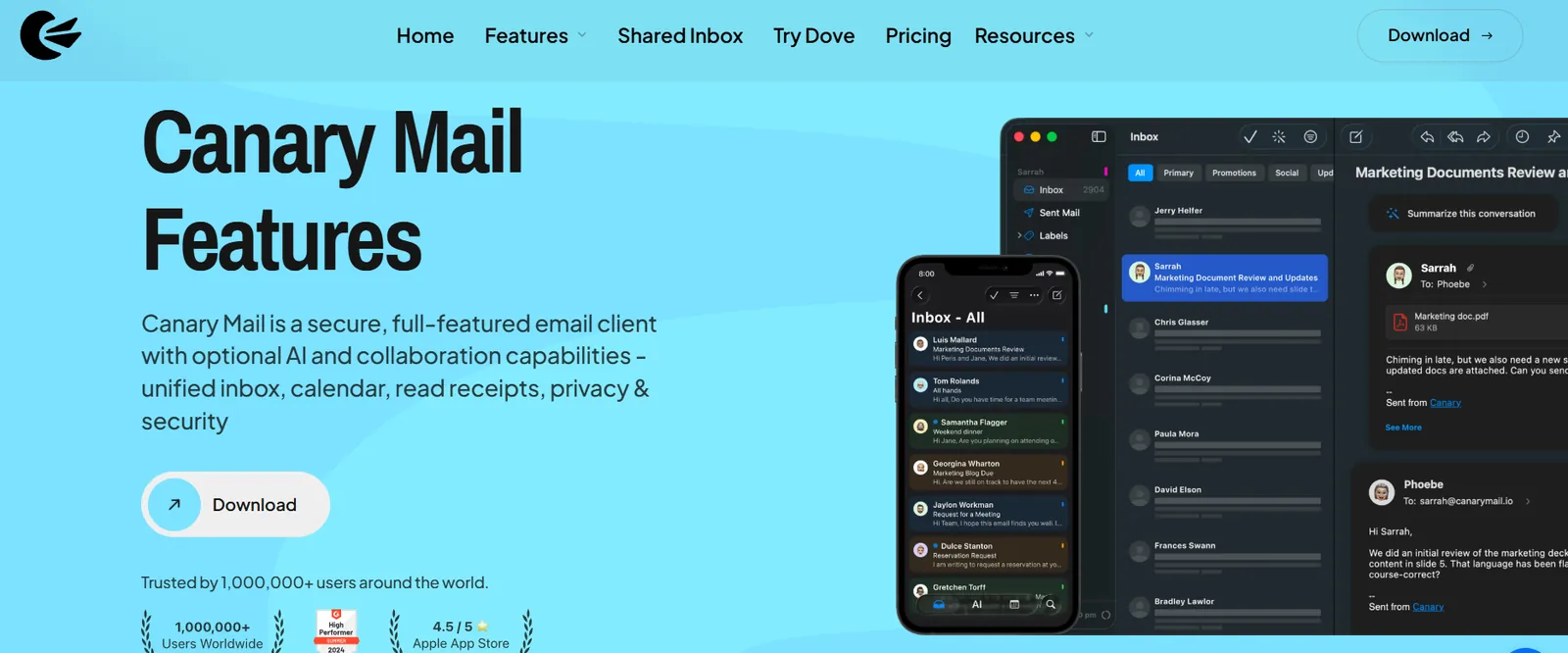
Disclosure: we make Canary Mail. Canary has no ads on any plan, puts all your accounts in one inbox, and blocks tracking pixels automatically. Our privacy policy says we don't use your email content for tracking or advertising, and your mail is stored on your device. Canary has more than 2 million users and has been featured by Apple on the App Store and the Mac App Store.
- Who it's for: people who want one ad-free app for all their accounts on phone and computer
- Price: free plan with unlimited accounts on up to 2 devices; Growth $36 a year adds AI writing and summaries; Pro+ $100 a year adds PGP and phishing protection
- Platforms: Android, iPhone, iPad, Mac, Windows
- Rating: 4.5 on the US App Store (8,786 ratings) and 4.3 on Google Play (7,706 reviews), as of October 16, 2026
- Downside: AI writing, summaries and send later are on the paid plans, which are yearly or lifetime, with no monthly option.
2. Thunderbird: Best free, open-source app for Android
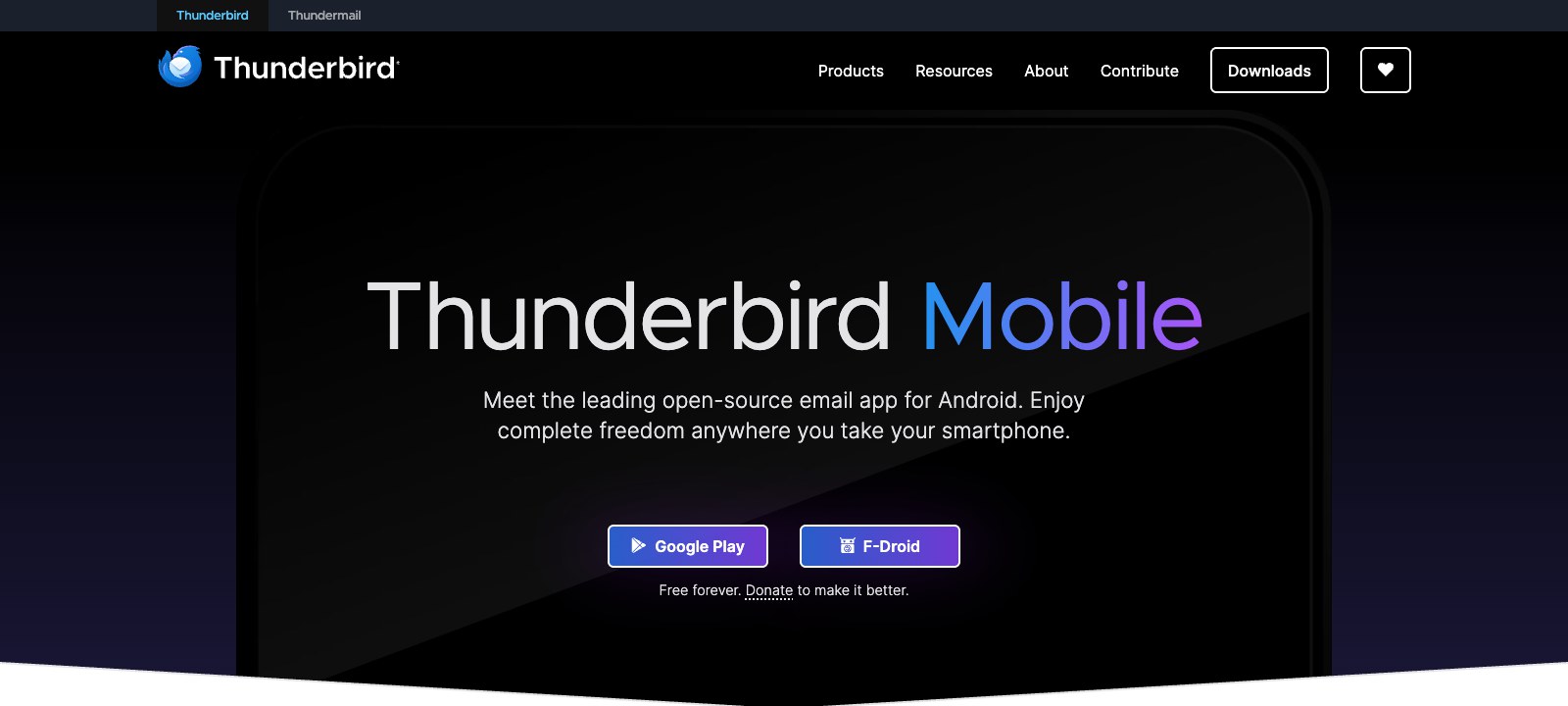
Thunderbird's Android app grew out of K-9 Mail and is made by the same team as the desktop app. It's free, open source and funded by donations, so there are no ads and no paid tier.
- Who it's for: Android users who want a free app with no ads and no catch
- Price: free; donations welcome
- Platforms: Android, Windows, Mac, Linux; iPhone/iPad: public TestFlight beta (not on the App Store)
- Rating (Android app): 3.5 on Google Play (10,057 reviews), as of October 16, 2026
- Downside: there's no iPhone app on the App Store yet, only an early public beta on TestFlight.
3. FairEmail: Best for privacy on Android
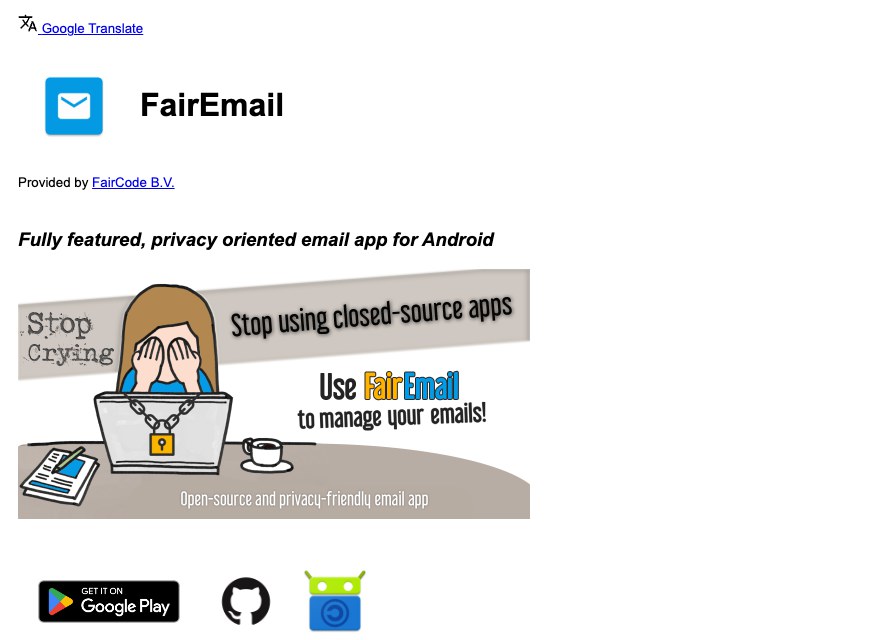
FairEmail is an open-source Android app built around privacy: no ads, no analytics, and it tries to recognize and disable tracking images. It works with almost any provider, including Gmail, Outlook and Yahoo, and supports OpenPGP and S/MIME.
- Who it's for: Android users who care most about privacy and don't mind a lot of settings
- Price: free, with optional Pro features
- Platforms: Android
- Rating: 4.7 on Google Play (30,708 reviews), as of October 16, 2026
- Downside: the interface is dense, it's Android only, and it doesn't support Exchange Web Services or ActiveSync.
4. Dove: Best ad-free app with free AI
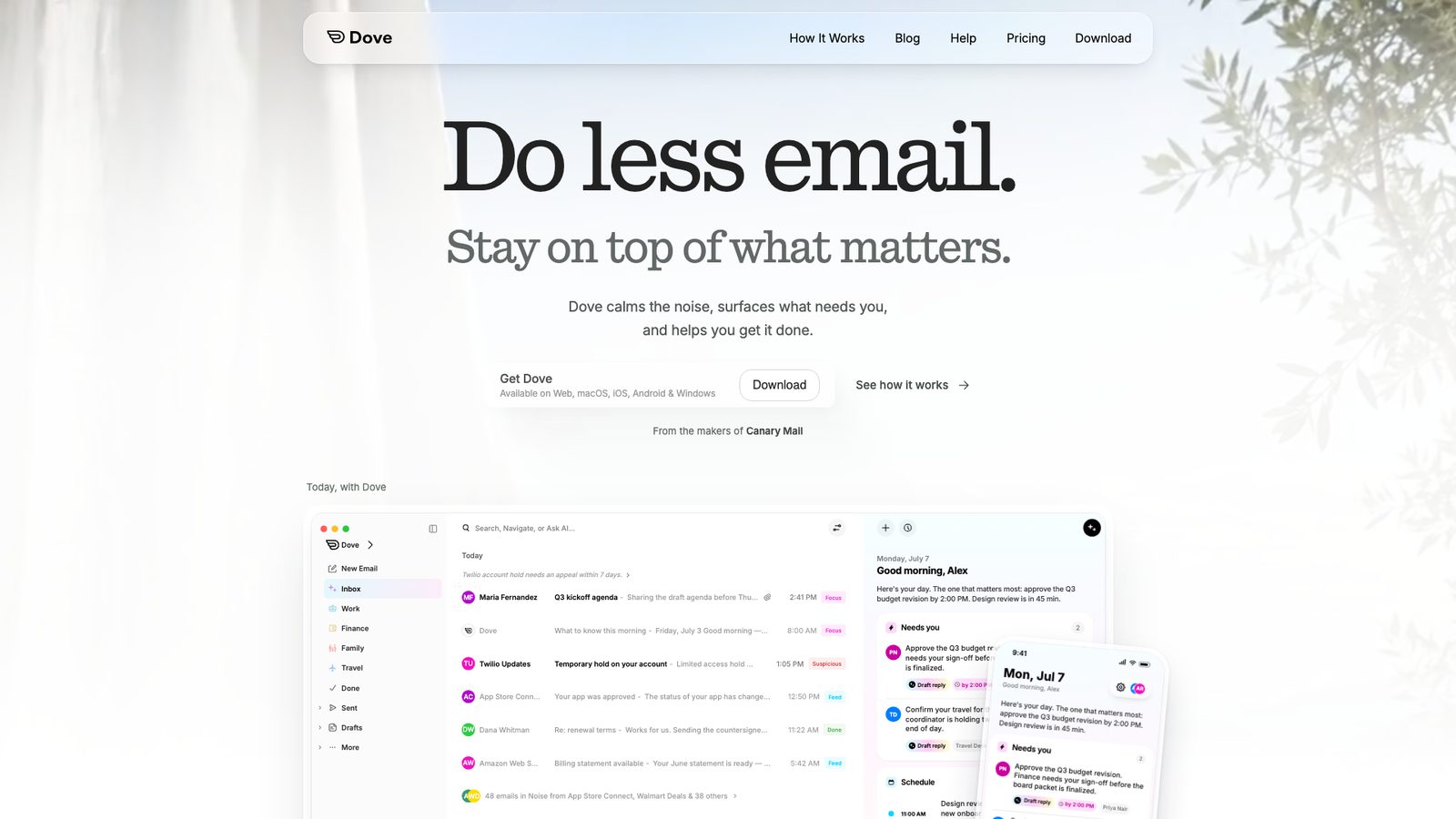
Disclosure: Dove comes from the same company as Canary Mail. Dove has no ads, sorts incoming mail by what needs your attention, and includes 10 AI actions a day on its free plan.
- Who it's for: people who want an ad-free inbox that also sorts and summarizes mail
- Price: free plan with unlimited accounts and 10 AI actions a day; Pro $20 a month or $200 a year
- Platforms: Android, iPhone, Mac, Windows, web
- Rating: 4.7 on the US App Store (21 ratings) and 4.8 on Google Play (34 reviews), as of October 16, 2026
- Downside: the free AI allowance runs out quickly, and the trial asks for a card.
5. Spark: Best ad-free app for small teams

Spark's free plan has no ads, unlimited accounts and a Smart Inbox that groups mail by type. It blocks 1x1 tracking pixels by default. For apps with a similar approach, see our Spark alternatives.
- Who it's for: people and small teams who want one free app on every device
- Price: free; Plus $10 a month or $99 a year; Pro $20 a month or $199 a year
- Platforms: Android, iPhone, iPad, Mac, Windows
- Rating: 4.6 on the US App Store (82,668 ratings) and 4.1 on Google Play (89,371 reviews), as of October 16, 2026
- Downside: to sync your accounts, Spark stores sign-in tokens on its servers (for IMAP accounts, your encrypted password), and it processes some mail there for notifications and send later.
6. BlueMail: Best ad-free app on the most platforms
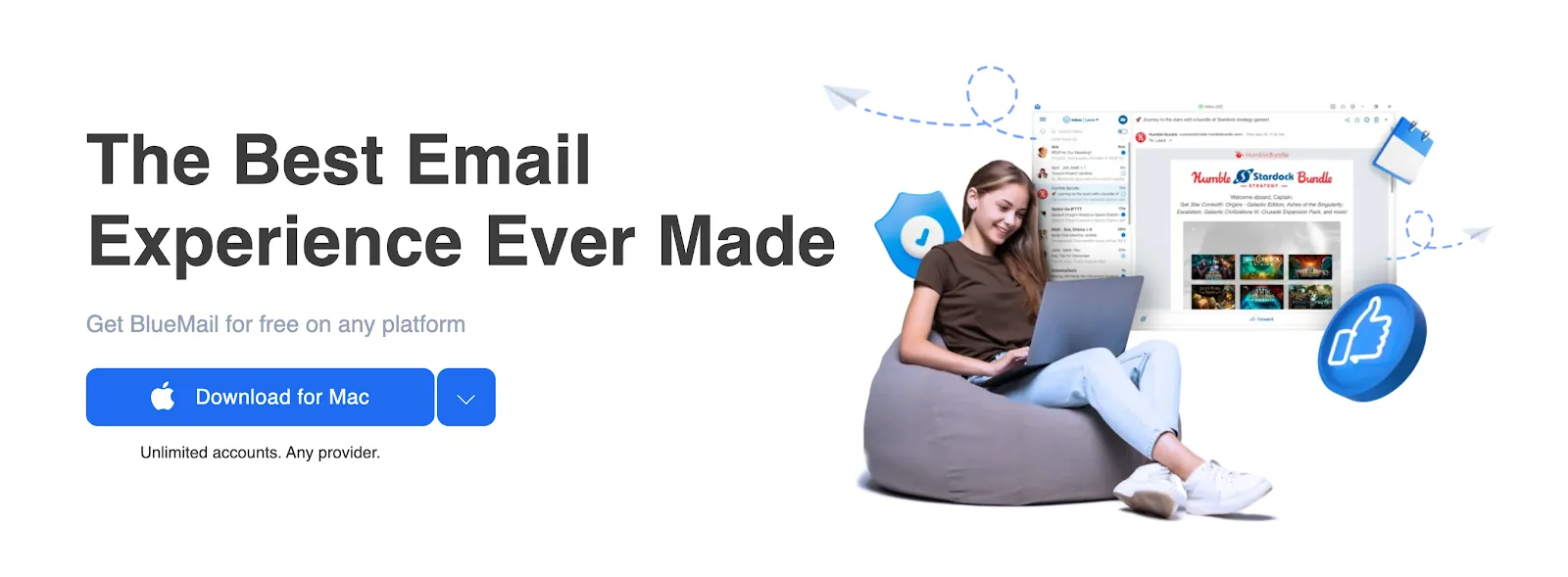
BlueMail's free Personal plan covers unlimited accounts, a unified inbox and PGP encryption, and runs on phones, Mac, Windows and Linux.
- Who it's for: people who want the same free app on every device they own
- Price: free; Plus $5 a month or $36 a year (on sale from $49) adds AI and backup
- Platforms: Android, iPhone, Mac, Windows, Linux
- Rating: 4.4 on the US App Store (10,537 ratings) and 4.1 on Google Play (798,728 reviews), as of October 16, 2026
- Downside: AI and email backup are paid extras.
7. Samsung Email: Best if you have a Galaxy phone
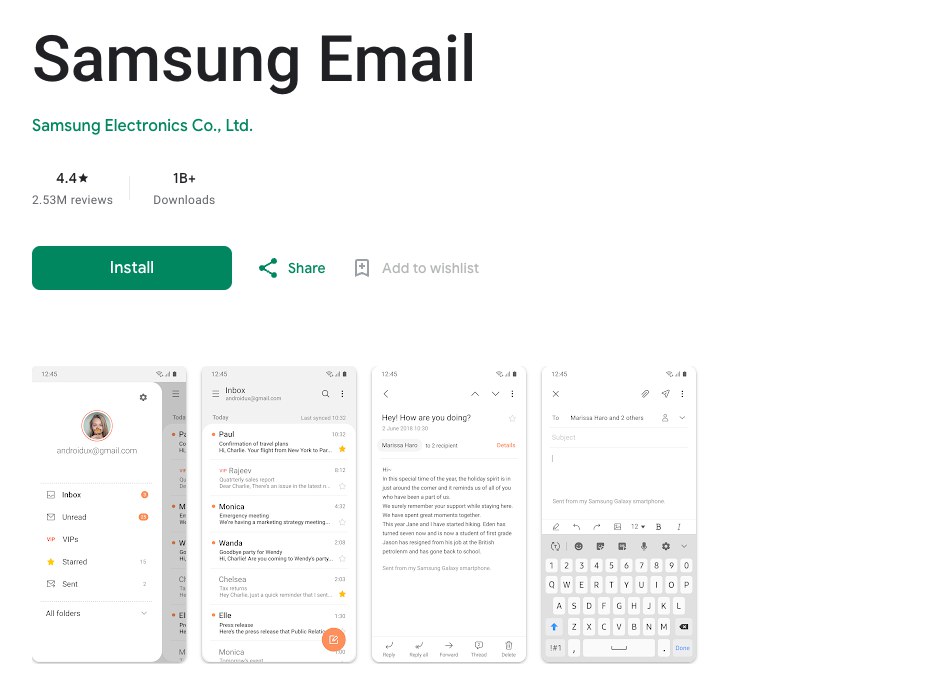
Samsung Email comes on many Galaxy phones and is a free download from the Galaxy Store or Google Play. It has no ads, handles Gmail, Yahoo and Microsoft accounts as well as IMAP and Exchange, and has a combined inbox.
- Who it's for: Samsung phone owners who want a simple ad-free app
- Price: free
- Platforms: Samsung Galaxy phones and tablets
- Rating: 4.4 on Google Play (2,528,279 reviews), as of October 16, 2026
- Downside: it's built for Samsung devices, with no versions for other phones or computers.
Ad-free email services, if you want a new address
If you'd rather leave Gmail, Outlook.com or Yahoo altogether, these services don't show ads:
Proton Mail
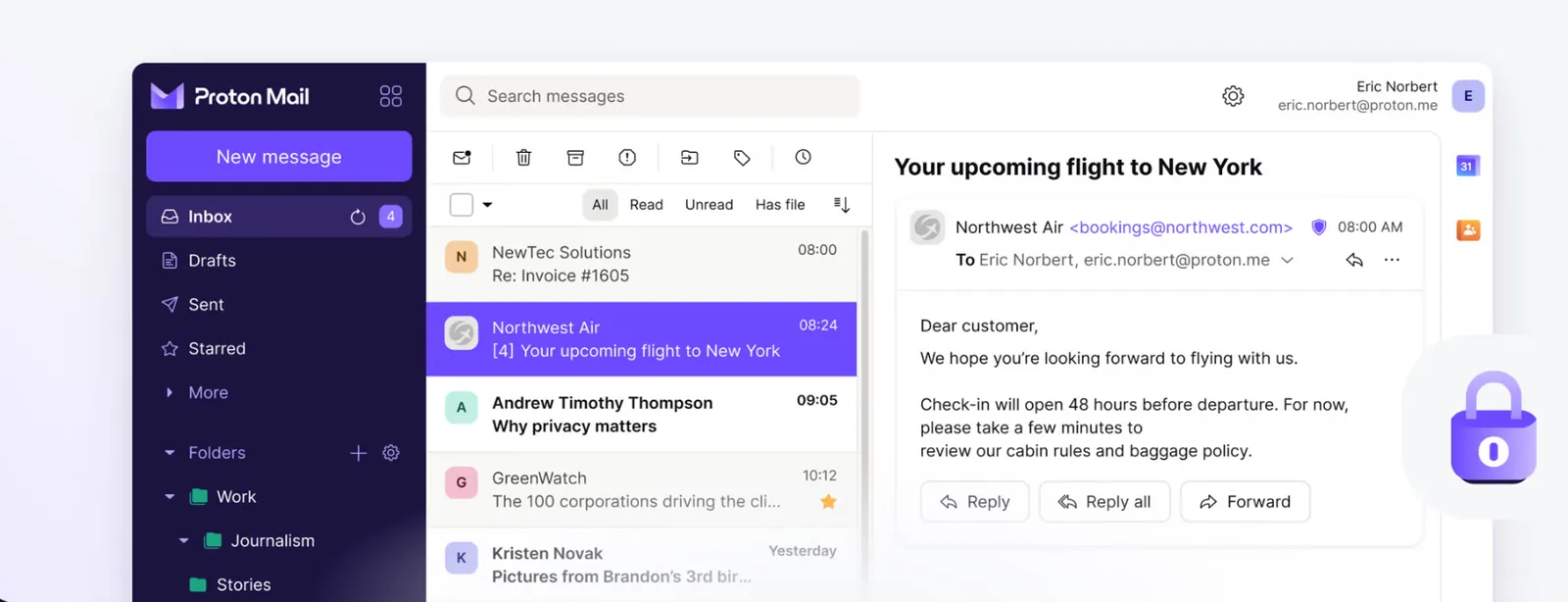
Proton Mail is end-to-end encrypted, based in Switzerland, and paid for by subscriptions rather than ads. The free plan has 1 GB; Mail Plus is $4.99 a month or $47.88 a year. Its apps block email trackers by default. For other encrypted services like it, see our list of Proton Mail alternatives.
Tuta
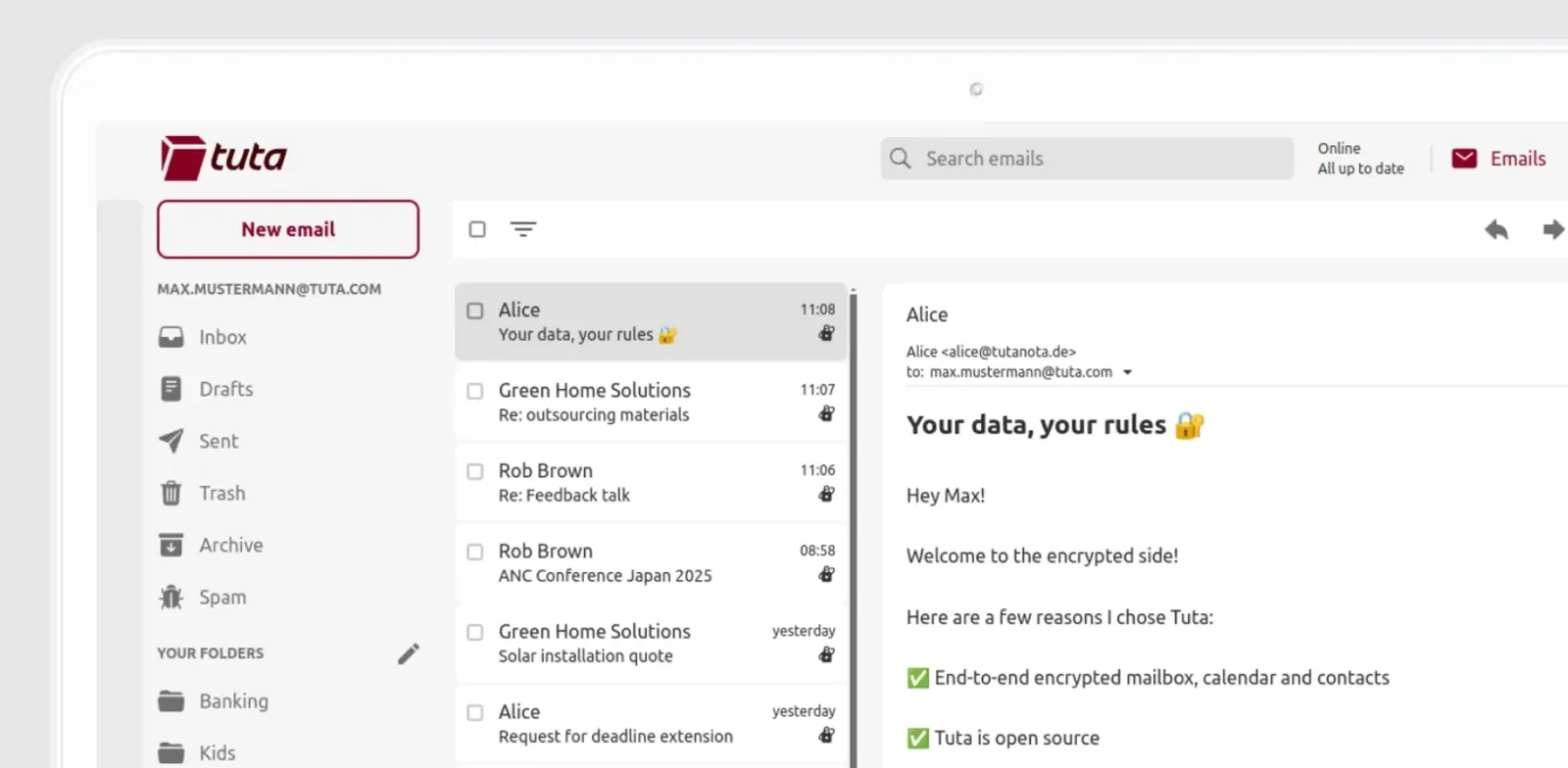
Tuta is end-to-end encrypted, based in Germany, with 1 GB free and no ads. Paid plans start at €3 a month billed yearly. Tuta doesn't support IMAP, so you use its own apps.
iCloud Mail
iCloud Mail is free with an Apple Account, with 5 GB of storage shared across iCloud. Apple's ads run in the App Store, Maps, News, Stocks and the TV app, not in iCloud Mail. It works on Android and Windows in a browser, or in other email apps with an app-specific password. More storage starts at $0.99 a month.
Zoho Mail
Zoho Mail offers ad-free email for your own domain, free for up to 5 users with 5 GB each. The free plan doesn't include IMAP, so you have to use Zoho's apps.
Fastmail
Fastmail is a paid, independent service with no ads, $6 a month or $60 a year after a 30-day trial.
How to remove ads from Gmail, Outlook and Yahoo
- Gmail: read your account in another app, or use a Google Workspace account, which never shows ads (from $7 per user a month with a yearly plan).
- Outlook.com: any Microsoft 365 subscription removes the ads, starting with Microsoft 365 Basic at $1.99 a month or $19.99 a year.
- Yahoo Mail: Yahoo Mail Plus removes them for $5 a month. To use Yahoo in another app, you may need to create an app password in your Yahoo account settings.
Ad-free isn't the same as private
Before you pick an app, check two more things:
- Tracking pixels. Many marketing emails include a hidden image that tells the sender when and where you opened them. Canary, FairEmail, Proton and Spark block them, Thunderbird blocks remote images by default, and Apple Mail's Mail Privacy Protection hides your IP address and whether you opened a message.
- How the app makes money. Edison Mail has no ads, but its privacy policy says it processes shopping, travel and billing emails into de-identified data that it sells to business subscribers. You can opt out in the app's Manage Privacy settings.
How we chose
We used Google Play's ad labels, then picked apps that work with common free accounts, are actively maintained, and cover both Android and iPhone between them. Each one gets the same fields and one real downside. For a wider list of free apps, including desktop ones, see our guide to the best free email clients. For encrypted services, see the best secure email apps.
Frequently asked questions
What is the best ad-free email app for Android?
Canary Mail if you want one app for all your accounts on phone and computer; Thunderbird or FairEmail if you want something free and open source. None of them show ads. See also the best email apps for Android.
Is there free email without ads?
Yes. Proton Mail and Tuta have free plans with no ads, and iCloud Mail is free with an Apple Account. You can also keep a free Gmail or Outlook.com address and read it in an ad-free app.
Why does Gmail show ads?
Free Gmail is paid for by ads in the Promotions and Social tabs of personal accounts. Google says it doesn't use the content of your emails to show you ads. Work and school accounts never show them.
How do I get rid of ads in the Gmail app?
The Gmail app shows ads for personal accounts. To avoid them, read your Gmail account in another app that doesn't show ads, or switch to a Google Workspace account.
Does the Outlook app have ads?
Yes, for free Outlook.com and Hotmail accounts. Any Microsoft 365 subscription removes them, from $1.99 a month.
Is paying for ad-free email worth it?
If the ads are your only complaint, switching apps is free. Paying makes sense if you also want more storage, a custom domain or end-to-end encryption, which is what Proton, Tuta and Fastmail sell.
What is the best ad-free email for business?
Google Workspace and Microsoft 365 business plans don't show ads, and Zoho Mail is ad-free for up to 5 users on your own domain for free. See the best free business email.
Sources
- Google: Ads in Gmail
- Google Ads: ads on Gmail
- Microsoft: About ads in Outlook
- Yahoo: Yahoo Mail Plus
- Yahoo: third-party app passwords
- Canary Mail features
- Thunderbird mobile
- FairEmail
- Spark: email privacy
- Proton Mail
- Tuta pricing
- Apple: iCloud storage plans
- Apple advertising and privacy
- Apple: Mail Privacy Protection
- Zoho Mail pricing
- Edison privacy policy
- App Store and Google Play ratings: each app's US store listing, checked October 16, 2026